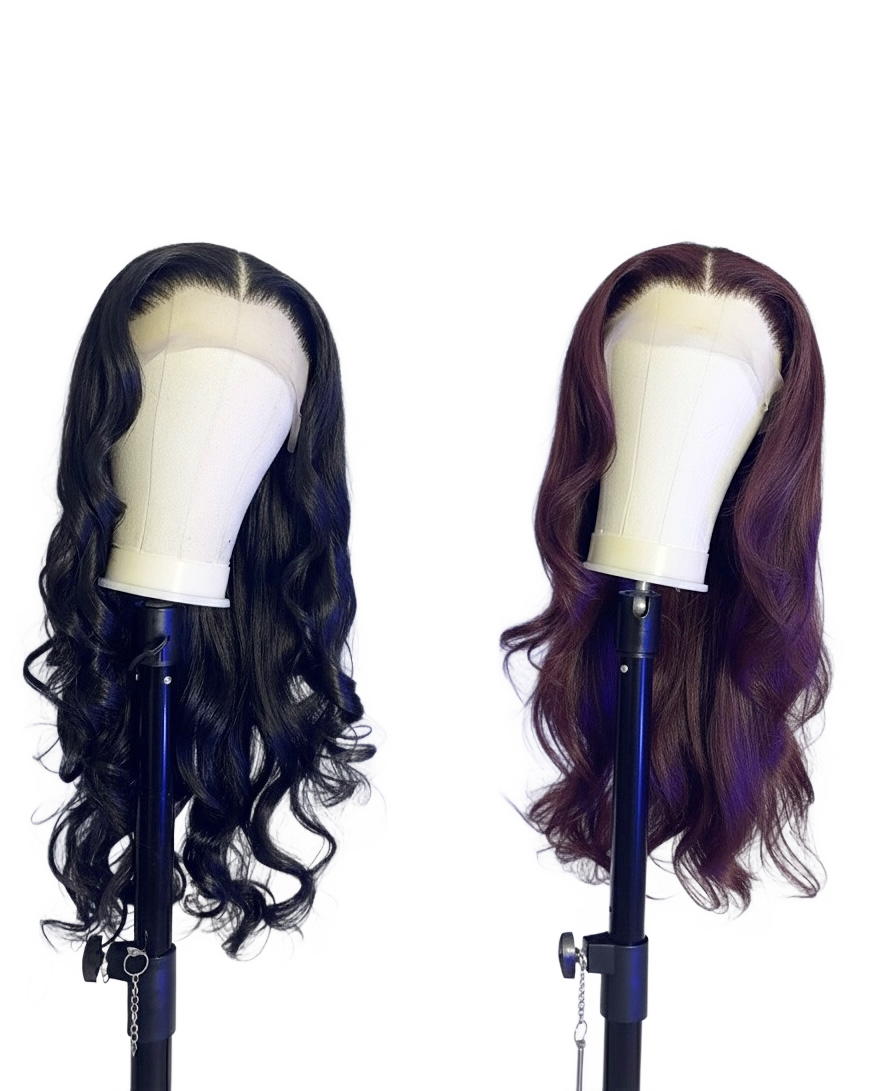
Lab made hair is everywhere right now, TikTok captions, vendor posts, comment sections. Ask five people what it means and you’ll get five different answers.
Here’s the real breakdown: what lab made hair actually is, how it stacks up against synthetic and human hair, and whether it’s worth chasing.
What Is Lab Made Hair?
Lab made hair is fibre engineered from scratch to replicate the feel, movement, and structure of real human hair, without a single strand sourced from a donor.
That’s not the only thing “lab-grown” hair refers to, though. Scientists are separately growing actual hair follicles in a lab, chasing a cure for baldness. Researchers in the US and Japan recently identified the missing cell type needed to grow functioning follicles that cycle through natural growth phases, though the work is still years from becoming a treatment. Different science, different goal. This piece is about the fibre, the kind that ends up in your wig.
Lab-Engineered Fibre vs Regular Synthetic: What Changed?
The short answer: material science caught up. Lab-engineered fibre is built from renewable, bio-based inputs instead of standard acrylic, and it performs closer to real hair as a result.
Old synthetic hair had a reputation, and not a flattering one. Plastic-shine. Frizzed if you looked at it wrong. Melted the second it got near heat. Standard heat-friendly synthetic fibre typically tops out around 350 degrees before it starts to break down.
Newer bio-fibre skips most of that. Brands are now working with fibres built from renewable materials like corn-derived polymers, some structured to copy the protein architecture of natural hair, holding curl and resisting frizz in a way old synthetics never could. If you’re still deciding between the classic routes, our breakdown on choosing between human hair and synthetic wigs is a good place to start before you factor bio-engineered options in.
Lab Made Hair vs Human Hair: Which One Actually Wins?
Human hair still wins on realism, full stop. Lab made hair isn’t trying to dethrone it, it’s solving a different problem: what happens to your wig after you’re done wearing it.
Standard synthetic fibre is essentially fine plastic strands made from petrochemical materials that don’t break down, so every worn-out unit sits in a landfill indefinitely. Lab-engineered fibre, built from biodegradable inputs, is designed to sidestep that. Add zero sourcing concerns, since no one’s hair was harvested to make it, and the appeal makes sense for anyone thinking past just the mirror.
Whichever fibre you land on, longevity comes down to the same habits. Our guide on caring for your wig and preserving its beauty applies whether you’re wearing human hair, classic synthetic, or the lab-made kind.
Will Lab-Made Fibre Become the Standard for Nigerian Wigs?
It’s heading that way, but human hair still holds the top spot for now. Consumers are asking more questions about what’s actually in their wig, not just how it looks in the mirror, and lab-engineered fibre sits right in the middle of that shift.
For Lagos heat and humidity specifically, that matters. A fibre engineered to hold its structure without frying under a blow dryer or wilting by midday is doing more than looking good, it’s built for how you actually live. Keep an eye on our roundup of trending wigs in Nigeria and their prices as bio-engineered options start showing up more in the mix.
The Bottom Line
Lab made hair isn’t a baldness cure and it isn’t hype for hype’s sake. It’s engineered fibre closing the gap between synthetic convenience and human hair realism.
Z3 Hairs works exclusively in human hair, still the safest, most realistic choice today, whatever the fibre labs come up with next. Browse the full Z3 Hairs collection and find your next unit.